What is Diamond Dotted Insulating Paper? A Complete Guide to DDP Paper Meaning & Working Principle
1. Introduction: Why DDP Paper Matters in Electrical Insulation
In modern transformer and motor manufacturing, selecting the right insulation material is critical for performance, reliability, and service life. One material that stands out is Diamond Dotted Insulating Paper (DDP).
2. What is Diamond Dotted Insulating Paper?
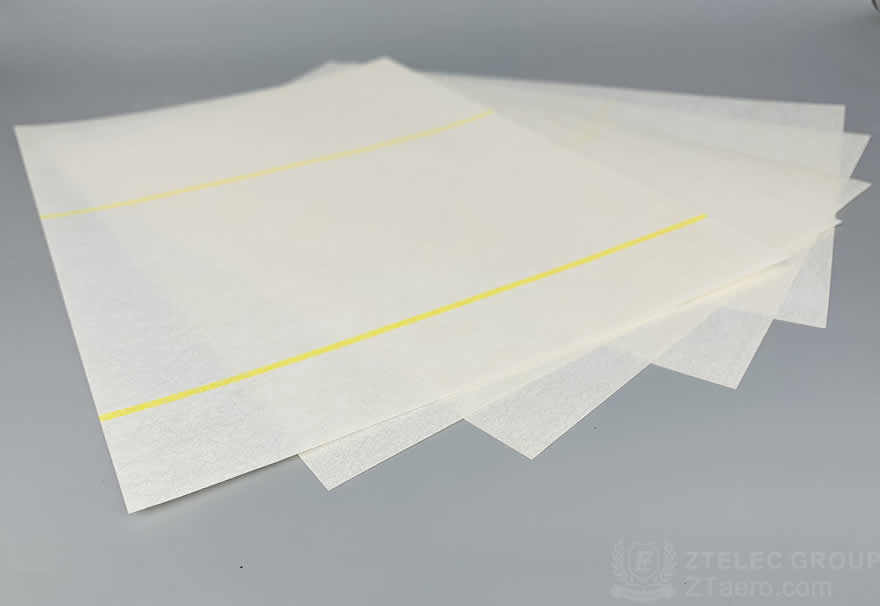
Diamond Dotted Insulating Paper (DDP) is a composite insulation material made by coating electrical insulation paper with thermosetting epoxy resin dots arranged in a diamond pattern.
In simple terms:
DDP = Insulation Paper + Heat-Activated Epoxy Adhesive
It serves two functions simultaneously:
• Electrical insulation between winding layers
• Mechanical bonding during heat curing
This dual functionality is why DDP is often searched as:
• epoxy coated insulation paper for transformers
• heat bonding insulation paper for windings

3. DDP Paper Meaning: Why “Diamond Dotted”?
The term “diamond dotted” directly reflects its structural design:
Diamond pattern → ensures uniform adhesive distribution
Dotted coating → avoids full-surface resin coverage
This design is essential because it:
• Maintains flexibility before heating
• Controls resin flow during curing
• Prevents over-bonding or insulation damage
4. Structure of Epoxy Dotted Insulation Paper
A typical DDP structure consists of:
1. Base Insulation Layer
• Usually kraft paper or presspaper
• Provides dielectric strength
• Common in transformer insulation paper applications
2. Epoxy Resin Dots (B-stage)
• Semi-cured thermosetting resin
• Solid at room temperature
• Activated during heating
3. Air Gaps Between Dots
• Preserve flexibility
• Allow controlled bonding
• Prevent premature adhesion
5. Working Principle of Diamond Dotted Insulating Paper
• Raw Material Preparation: High-performance insulating base paper and premium epoxy resin system are carefully selected. The quality of raw materials directly determines the electrical performance and mechanical strength of the product.
• Dispensing/Coating Process: Epoxy resin is uniformly coated onto the surface of the insulating paper in a diamond-patterned dot pattern using precision equipment. This process balances adhesion, breathability, and flexibility, requiring extremely high precision and thickness.
• Drying and Pre-curing: After coating, the material is dried and pre-cured at a controlled temperature, allowing the epoxy resin to reach a semi-cured state, ensuring subsequent flowability and stability during storage and transportation.
• Slitting and Shaping: The material is slitting and cutting to specified sizes (rolls/sheets) according to application requirements, requiring precise dimensions and neat edges to suit the actual application scenario.
• Quality Inspection and Performance Verification: Finished products must pass tests for electrical strength, adhesion, thermal performance, and appearance/dispensing uniformity to ensure compliance with industry standards and customer requirements.
6. How Epoxy Dots Work (Core Mechanism)
If you're looking for an epoxy dotted insulation paper explanation, here’s the key:
• Epoxy dots act as controlled micro-adhesive points
• They activate only when heated
• They prevent excessive resin saturation
This ensures:
• Strong bonding
• Clean insulation structure
• No resin overflow
This is why DDP is often used as:
• bonding insulation paper for transformer windings
• epoxy adhesive insulation material for coils
7. Why Heating Enables Bonding
The bonding mechanism relies on two physical and chemical changes:
1. Thermal Softening
• Epoxy viscosity decreases
• Resin becomes flowable
2. Thermosetting Reaction
• Cross-linking forms a 3D polymer network
• Material becomes:
• Heat-resistant
• Mechanically strong
• Electrically stable
8. Key Advantages of DDP Paper
• Combines insulation + adhesion
• Improves winding mechanical stability
• Reduces displacement during short circuits
• Enhances dielectric performance
• Simplifies manufacturing process
From a procurement perspective, DDP is often preferred as:
• cost-effective transformer insulation solution
9. Typical Applications
DDP is widely used in:
• Power transformers
• Distribution transformers
• Oil-filled transformers
• Reactor coils
Especially for:
• Layer insulation
• Turn-to-turn insulation
10. Conclusion: Why DDP is Essential
To summarize:
• Diamond Dotted Insulating Paper is a heat-activated bonding insulation material
• Epoxy dots enable controlled adhesion during heating
• Final curing creates a strong, integrated insulation system
That’s why DDP remains a core material in:
• High-voltage insulation systems
• Transformer coil manufacturing
• Industrial electrical equipment